Mold Removal in Cedar Grove, FL
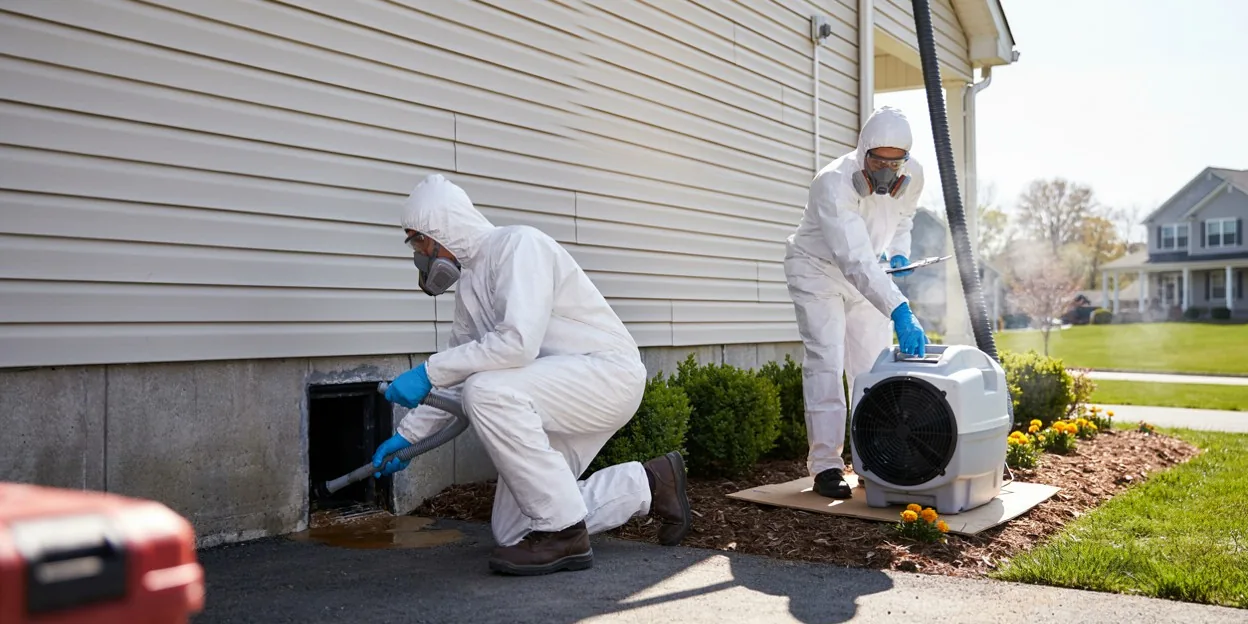
Cedar Grove at the Woodlands is the newer community off Toledo Blade Boulevard north of Price, built in phases through the 2010s and into the 2020s with block-on-slab homes, shingle roofs, paver drives, and small lakes between the streets. Many owners are first-time Florida buyers who came for new construction and a short drive to Interstate 75.
A house that is five years old still grows mold; it just does it in the places new houses do. Builder-grade flex duct sweats in the attic. The master bath has no window and the fan runs for two minutes. And a new house closed up for a summer with the thermostat high lets humidity climb until the closets smell. Shingle roofs here were new enough to hold in Ian, but Milton in October 2024 tested them again.
Cedar Grove homeowners who call us reach an independent mold provider who works east North Port. The provider meters the ceilings and walls before writing a scope.
New houses, new-house mold
Rings on a bedroom ceiling under the duct run lead to attic mold remediation. Spots on the bath ceiling that return after painting are bathroom mold removal. A smell at the vents from a closet handler is HVAC mold cleaning.
Builder warranties and an association review
Many Cedar Grove houses are still inside a builder's structural or workmanship warranty, and a leak at a window, a roof, or a plumbing line should be documented and reported to the builder before the drywall is cut, so the warranty claim and the mold scope match. The community's association reviews exterior changes. Permits for drywall or plumbing in the rebuild go through North Port's Development Services office, and the provider pulls them.
Call (941) 420-6510 now and tell us how old the house is and where you see it. We put you through to a mold provider who works Cedar Grove.
Services Available in Cedar Grove
Mold Removal
Containment, negative air, and removal of wet drywall, trim, and insulation from a North Port block house, then cleaning and drying of what stays.
Black Mold Removal
Dark growth handled under full containment and protective gear. Color does not name the species, and the steps do not change.
Whole-Home Mold Remediation
Room-by-room containment and removal after storm water, weeks without power, or a house closed up through a wet summer.
HVAC Mold Cleaning
Air handler, coil, drain pan, and duct cleaning when the musty smell arrives every time the air conditioning cycles on.
Bathroom Mold Removal
Growth on ceilings, in grout, behind vanities, and inside wet drywall from steam and slow leaks, the most common first call.
Attic Mold Remediation
Roof-deck and truss mold from lifted shingles, blocked soffits, and flex duct sweating in a hot North Port attic.
Mold Odor Removal
Tracing a musty smell to the wet material behind it, removing that material, and clearing the air instead of masking it.
Mold Damage Repair
Drywall, baseboard, insulation, and cabinet bottoms rebuilt after removal, with the water source fixed before anything closes up.