Mold Removal in Wellen Park, FL
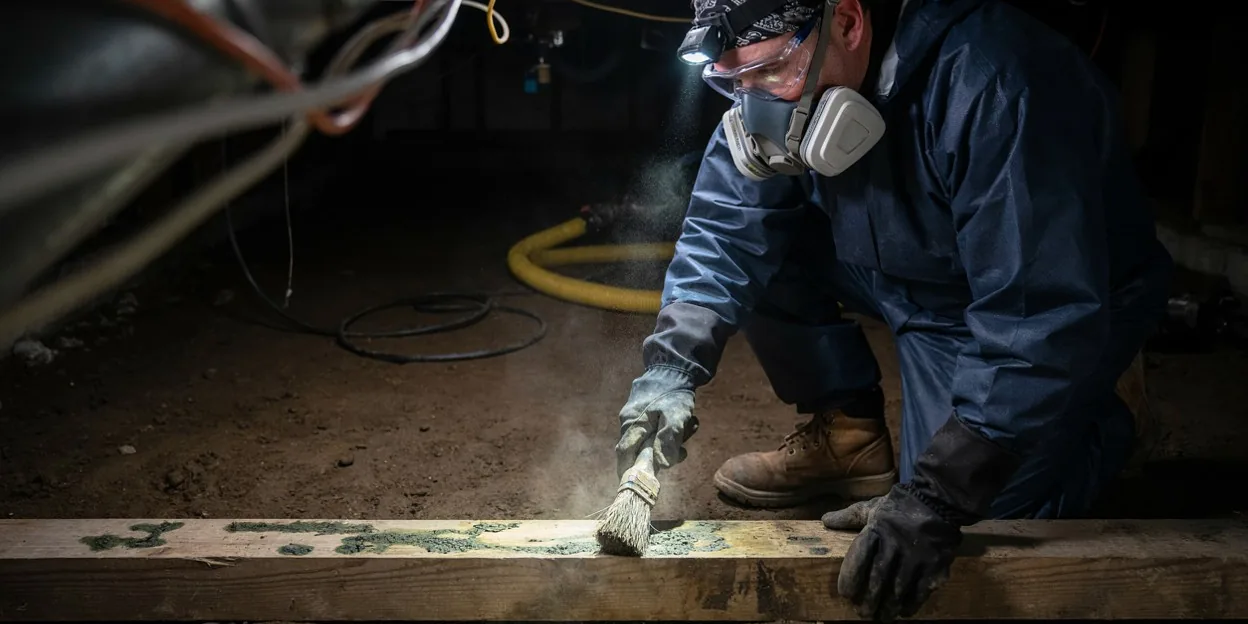
Wellen Park is the master-planned community on the west side of North Port, about 11,000 acres between U.S. 41 and the Myakka River that was called the West Villages until 2020. Its neighborhoods, from Grand Palm and IslandWalk to Sunstone, Lakespur, and Brightmore, are new: nearly every house here was built after 2005, most after 2015, with concrete block or poured walls, tile or metal roofs, impact glass, and the air handler in a conditioned closet or garage.
New houses still grow mold, just in different places. Big master baths in the center of the plan grow spots on the ceiling when nobody runs the fan. Lanai sliders leak under wind-driven rain. And a house closed up for the summer with the thermostat at 82 lets indoor humidity climb until the closets smell. Wellen Park also has a large share of seasonal owners, which is how a small leak in June becomes a problem in November.
Wellen Park homeowners who call us reach an independent mold provider who works the west side of North Port. The provider meters the walls before writing a scope.
New construction, familiar calls
Ceiling spots in a windowless bath are bathroom mold removal. A seasonal house that smells on return is mold odor removal. A slider or window that leaked during Ian or Milton and wet the wall below leads to mold removal along that run.
Downtown Wellen, the HOA, and a builder's warranty
Each neighborhood in Wellen Park has its own association, and exterior repairs after mold work, from a replaced slider to a reroofed section, go through that association's review. Houses still under a builder's warranty should have the leak documented before anything is cut, because the warranty claim and the mold scope need to tell the same story. Downtown Wellen's 80-acre lake and the shops around it sit at the community's center, and the storm water system that feeds it is why the streets here drain faster than the old GDC grid to the east.
Call (941) 420-6510 now and tell us which Wellen Park neighborhood you are in and what you see. We put you through to a mold provider who works the west side.
Services Available in Wellen Park
Mold Removal
Containment, negative air, and removal of wet drywall, trim, and insulation from a North Port block house, then cleaning and drying of what stays.
Black Mold Removal
Dark growth handled under full containment and protective gear. Color does not name the species, and the steps do not change.
Whole-Home Mold Remediation
Room-by-room containment and removal after storm water, weeks without power, or a house closed up through a wet summer.
HVAC Mold Cleaning
Air handler, coil, drain pan, and duct cleaning when the musty smell arrives every time the air conditioning cycles on.
Bathroom Mold Removal
Growth on ceilings, in grout, behind vanities, and inside wet drywall from steam and slow leaks, the most common first call.
Attic Mold Remediation
Roof-deck and truss mold from lifted shingles, blocked soffits, and flex duct sweating in a hot North Port attic.
Mold Odor Removal
Tracing a musty smell to the wet material behind it, removing that material, and clearing the air instead of masking it.
Mold Damage Repair
Drywall, baseboard, insulation, and cabinet bottoms rebuilt after removal, with the water source fixed before anything closes up.